Upcoming Sessions
- There are no upcoming sessions scheduled
See All Upcoming Sessions

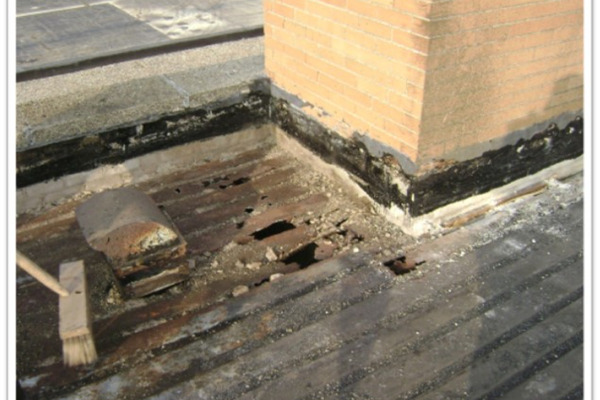
Reroofing Course Description This course covers a range of concepts related to roof renewal and replacement on existing buildings. This includes steps required to successfully evaluate an existing roof and make decisions regarding reroofing design principles based on available industry references, material technologies and code requirements. Speakers will present a review of reroof options and decision-making principles with focus on the nuance of roof replacement/ renewal for existing buildings and how this differs from new construction. The course will further provide tips for preparation of clear and effective contract documents (drawings and specifications) and discuss roles of the stakeholders through project implementation, including the bid process and construction execution. Lastly, speakers will discuss the impact of roof renewal on existing and occupied buildings and considerations that will improve coordination and successful execution. This course is designed for building consultants, architects, and engineers who regularly engage in renovation of existing buildings as well as facility managers/building owners who want to better inform roof renewal decisions for their buildings. Course Access Courses are accessible in LearnUpon for one year from the date of purchase. Credit Start Date: May 12, 2026 Credit Expiration Date: May 12, 2029 Original Credit Start Date: March 28, 2023 Original Credit Expiration Date: March 28, 2026 Course Prerequisites None Knowledge Level: Intermediate Continuing Education Credit Statement This course is approved for 6.0 IIBEC CEH This course is approved for 6.0 AIA LU/Elective Continuing Education Credit Claim Information In order to claim IIBEC CEHs, learners are required to: Achieve a passing score of 70% on the summative assessment (learners are provided unlimited attempts) Complete the course Evaluation & Attestation Survey After completing the Evaluation & Attestation Survey, learners will be able to download a Certificate of Completion. Learners are responsible for self-reporting IIBEC CEH credit by uploading their Certificate of Completion to their IIBEC Portal. For assistance in self-reporting CEHs, please reach out to: cehs@iibec.org In order to claim AIA LU, learners are required to complete the above requirements, as well as: Complete the AIA Survey (AIA member number is required) AIA continuing education Learning Units earned upon completion of this course will be reported to AIA CES for AIA members. Original Course Authors Jerry Abendroth, RBEC, RRO, CDT Jeremiah Webster, RBEC, RRC, REWC, RWC, RRO, PE Original Course Reviewers Dale B. Clark, RRO Bruce Hall, Ph.D. (ABD), RBEC, RRC, RWC, REWC, CDT, A.AIA 2026 Course Reviewers Stephanie Robinson, P.Eng. Aaron Nelson, RBEC, RRC, RWC, RRO, REWC AIA Course Number: RERF_2026_OD AIA CES Provider statement IIBEC is a registered provider of AIA-approved continuing education under Provider Number G024. All registered AIA CES Providers must comply with the AIA Standards for Continuing Education Programs. Any questions or concerns about this provider or this learning program may be sent to AIA CES (cessupport@aia.org or (800) AIA 3837, Option 3). This learning program is registered with AIA CES for continuing professional education. As such, it does not include content that may be deemed or construed to be an approval or endorsement by the AIA of any material of construction or any method or manner of handling, using, distributing, or dealing in any material or product. AIA continuing education credit has been reviewed and approved by AIA CES. Learners must complete the entire learning program to receive continuing education credit. AIA continuing education Learning Units earned upon completion of this course will be reported to AIA CES for AIA members. Certificates of Completion for AIA members are available upon request. Read more
Content
Price

Rooftop Quality Assurance Course Description Rooftop Quality Assurance (RTQA) is an 8-hour course for professionals interested in performing observation services to ensure the roof installation is consistent with construction documents and ownership requirements. The program includes thorough overviews of the major roof system assemblies which the professional observer will encounter when performing rooftop quality assurance services for ownership/design groups. The course includes in-depth descriptions of the observer’s roles and responsibilities for proven success in the field. RTQA is designed to cover all aspects of the rooftop quality assurance process, including differing roof installation conditions, and resolving issues that arise during construction and renovation. The course is ideal for roofing material manufacturers, general contractors, quality assurance observers, architectural and engineering field techs, and field inspectors. Course Access Courses are accessible in LearnUpon for one year from the date of purchase. Credit Start Date: May 4, 2026 Credit Expiration Date: May 4, 2029 Course Prerequisites None Knowledge Level: Intermediate Continuing Education Credit Statement This course is approved for 8.0 IIBEC CEH This course is approved for 8.0 AIA LU/Elective AIA Course Number: RTQA_2025_OD Continuing Education Credit Claim Information In order to claim IIBEC CEHs, learners are required to: Achieve a passing score of 70% on the summative assessment (learners are provided unlimited attempts) Complete the course Evaluation & Attestation Survey After completing the Evaluation & Attestation Survey, learners will be able to download a Certificate of Completion. Learners are responsible for self-reporting IIBEC CEH credit by uploading their Certificate of Completion to their IIBEC Portal. For assistance in self-reporting CEHs, please reach out to: cehs@iibec.org In order to claim AIA LU, learners are required to complete the above requirements, as well as: Complete the AIA Survey (AIA member number is required) AIA continuing education Learning Units earned upon completion of this course will be reported to AIA CES for AIA members. Course Author(s)/Reviewer(s) Jerry Abendroth, RRC, RBEC, CDT Burt Carver, RRC, RRO Jon Peat, RRC, RRO Michel Paulin Course Presenter(s) Jerry Abendroth, RRC, RBEC, CDT Burt Carver, RRC, RRO AIA CES Provider statement IIBEC is a registered provider of AIA-approved continuing education under Provider Number G024. All registered AIA CES Providers must comply with the AIA Standards for Continuing Education Programs. Any questions or concerns about this provider or this learning program may be sent to AIA CES (cessupport@aia.org or (800) AIA 3837, Option 3). This learning program is registered with AIA CES for continuing professional education. As such, it does not include content that may be deemed or construed to be an approval or endorsement by the AIA of any material of construction or any method or manner of handling, using, distributing, or dealing in any material or product. AIA continuing education credit has been reviewed and approved by AIA CES. Learners must complete the entire learning program to receive continuing education credit. AIA continuing education Learning Units earned upon completion of this course will be reported to AIA CES for AIA members. Certificates of Completion for AIA members are available upon request. Read more
Content
Price

Course Overview This session was originally presented at the 2023 IIBEC International Convention & Trade Show in Houston, Texas. This course includes the recording of the session, a summative assessment consisting of 10 multiple-choice questions, and surveys required to claim continuing education credit. Description Currently, the industry is experiencing the critical challenge of bridging the generational divide and mentoring in a hybrid work environment. This presentation will address how to begin bridging that divide by building a foundation of trust and understanding the expectation, motivation, and goal differences between the generations. In establishing an industry-standard-based training approach while emphasizing the importance of collaborative fieldwork to create a feedback loop, the divide can be lessened. This presentation is intended for industry professionals from varying generations and uses research studies as well as real-time research to support its learning objectives. Findings are primarily based on direct experience of and between the two authors/presenters. Course Access Courses are accessible in LearnUpon for one year from the date of purchase. Credit Start Date February 22, 2023 Credit Expiration Date February 22, 2026 Course Prerequisites None Knowledge Level: Beginner/Intermediate Continuing Education Credit Statement This course is approved for 1.0 IIBEC CEH This course is approved for 1.0 AIA LU Elective Continuing Education Credit Claim Information In order to claim IIBEC CEHs, learners are required to: Achieve a passing score of 70% on the summative assessment (learners are provided unlimited attempts) Complete the course Evaluation & Attestation Survey After completing the Evaluation & Attestation Survey, learners will be able to download a Certificate of Completion. Learners are responsible for self-reporting IIBEC CEH credit by uploading their Certificate of Completion to their IIBEC Portal. For assistance in self-reporting CEHs, please reach out to: cehs@iibec.org In order to claim AIA LU, learners are required to complete the above requirements, as well as: Complete the AIA Survey (AIA member number is required) AIA continuing education Learning Units earned upon completion of this course will be reported to AIA CES for AIA members. Author(s)/Speaker(s) Kevin Palma, RWC, LEED, AP Seal Building Enclosure LLC | Houston, TX Nichole Thomas Seal Building Enclosure LLC | Houston, TX AIA Course Number : 15.23ConOD AIA CES Provider statement IIBEC is a registered provider of AIA-approved continuing education under Provider Number G024. All registered AIA CES Providers must comply with the AIA Standards for Continuing Education Programs. Any questions or concerns about this provider or this learning program may be sent to AIA CES (cessupport@aia.org or (800) AIA 3837, Option 3). This learning program is registered with AIA CES for continuing professional education. As such, it does not include content that may be deemed or construed to be an approval or endorsement by the AIA of any material of construction or any method or manner of handling, using, distributing, or dealing in any material or product. AIA continuing education credit has been reviewed and approved by AIA CES. Learners must complete the entire learning program to receive continuing education credit. AIA continuing education Learning Units earned upon completion of this course will be reported to AIA CES for AIA members. Certificates of Completion for AIA members are available upon request. Read more
Content
Price

Course Overview This session was originally presented at the 2023 IIBEC International Convention & Trade Show in Houston, Texas. This course includes the recording of the session, a summative assessment consisting of 10 multiple-choice questions, and surveys required to claim continuing education credit. Description Several thin brick wall systems have been developed for the construction industry, ranging from composite thin brick precast panelized walls to rail-supported thin brick rain screens. Each of the thin brick wall systems has benefits and drawbacks that require careful consideration when considering climate, code, and adjacent wall assemblies. When the wrong thin brick system is chosen for a specific application, or the system is composed of using the wrong elements, problems can occur during or soon after construction. Our experience investigating problems with thin brick wall systems and navigating design challenges during construction has shown the importance of understanding the variety of systems that exist and when one system may want to be selected versus another. Understanding how each system functions is also essential to understanding how the detailing of the systems varies and the importance of matching the right details to the right system. IIBEC Core Competency Tag(s): Roofing Subtopics: Forensic Investigation, Wind & Structural, Geographic Consideration& Impact, Quality Control Knowledge Level: Intermediate Recommended Course Prerequisites: A baseline understanding of the following is recommended: ASTM standards for testing of exterior wall section and knowledge of wall construction methods and materials Author/Presenter Mary Donlon Simpson Gumpertz & Heger Inc. | Waltham, MA Matthew Pitzer, AIA, LEED BD+C Simpson Gumpertz & Heger Inc. | Waltham, MA Disclaimer The views and opinions expressed in the session content at this education event are those of the content author(s)/speaker(s) and do not necessarily reflect the policies or positions of the International Institute of Building Enclosure Consultants (IIBEC). IIBEC makes no warranty, whether express or implied, as to the completeness, accuracy or validity of the information provided. Credit Start Date: February 11, 2026 Credit Expiration Date: February 11, 2029 Original Credit Start Date: February 22, 2023 Course Access: Courses are accessible in LearnUpon for one year from the date of purchase. Content Review Information Review Date: January 27, 2026 Reviewer: Samir Ibrahim, F-IIBEC, AIA Continuing Education Credit Statements This course is approved for 1.0 IIBEC CEH This course is approved for 1.0 AIA LU/HSW AIA Program Number: CNV23_BTB_OD26 AIA Provider Number: G024 AIA CES Provider statement IIBEC is a registered provider of AIA-approved continuing education under Provider G024. All registered AIA CES Providers must comply with the AIA Standards for Continuing Education Programs. Any questions or concerns about this provider or this learning program may be sent to AIA CES (cessupport@aia.org or (800) AIA 3837, Option 3). This learning program is registered with AIA CES for continuing professional education. As such, it does not include content that may be deemed or construed to be an approval or endorsement by the AIA of any material of construction or any method or manner of handling, using, distributing, or dealing in any material or product. AIA continuing education credit has been reviewed and approved by AIA CES. Learners must complete the entire learning program to receive continuing education credit. AIA continuing education Learning Units earned upon completion of this course will be reported to AIA CES for AIA members. Certificates of Completion for both AIA members and non-AIA members are available upon request. Read more
Content
Price

Course Overview This session was originally presented at the 2023 IIBEC International Convention & Trade Show in Houston, Texas. This course includes the recording of the session, a summative assessment consisting of 10 multiple-choice questions, and surveys required to claim continuing education credit. Description For several years, the insurance industry has been addressing an important question: what is considered cosmetic damage vs. functional damage when assessing hail impact on low-slope metal roofing? Cosmetic damage due to hail is often excluded from coverage. However, more recently, the distinction between cosmetic and functional damage has been challenged by forensic experts potentially basing their opinions on unsubstantiated claims of reduced service life and the performance of a dimpled roof. Does moisture retention or microfracture within a hail divot really diminish roof life? The Metal Building Manufacturers Association has recently completed two research projects on the effects of hail on coated steel roofing systems. The projects, which evaluated the coating damage due to roll forming of 55% Al-Zn-coated steel roof panels and the water ponding drying rates for simulated hail impact divots on 55% Al-Zn-coated steel roof panels, provide much-needed information to define the differences between “cosmetic” and “functional” damage. This presentation provides background on the hail damage issue and presents the results of the recently completed research, which will come to bear on the definition of functional damage going forward. It is essential to properly evaluate hail impact on coated steel roofing. IIBEC Core Competency Tag(s): Roofing Subtopics: Forensic Investigation, Wind/ Structural, Codes & Standards, Inspection/ Quality Control, Restoration Knowledge Level: Intermediate Recommended Course Prerequisites: A baseline understanding of the following is recommended: Material physics and material testing protocol along with building design standards Author/Presenter Ron Dutton Ron Dutton Consulting Services LLC | Annapolis, MD Robert Haddock S-5 | Colorado Springs, CO Disclaimer The views and opinions expressed in the session content at this education event are those of the content author(s)/speaker(s) and do not necessarily reflect the policies or positions of the International Institute of Building Enclosure Consultants (IIBEC). IIBEC makes no warranty, whether express or implied, as to the completeness, accuracy or validity of the information provided. Credit Start Date: February 11, 2026 Credit Expiration Date: February 11, 2029 Original Credit Start Date: February 22, 2023 Course Access: Courses are accessible in LearnUpon for one year from the date of purchase. Content Review Information Review Date: January 24, 2026 Reviewer: Samir Ibrahim, F-IIBEC, AIA Continuing Education Credit Statements This course is approved for 1.0 IIBEC CEH This course is approved for 1.0 AIA LU/HSW AIA Program Number: CNV23_OHM_OD26 AIA Provider Number: G024 AIA CES Provider statement IIBEC is a registered provider of AIA-approved continuing education under Provider G024. All registered AIA CES Providers must comply with the AIA Standards for Continuing Education Programs. Any questions or concerns about this provider or this learning program may be sent to AIA CES (cessupport@aia.org or (800) AIA 3837, Option 3). This learning program is registered with AIA CES for continuing professional education. As such, it does not include content that may be deemed or construed to be an approval or endorsement by the AIA of any material of construction or any method or manner of handling, using, distributing, or dealing in any material or product. AIA continuing education credit has been reviewed and approved by AIA CES. Learners must complete the entire learning program to receive continuing education credit. AIA continuing education Learning Units earned upon completion of this course will be reported to AIA CES for AIA members. Certificates of Completion for both AIA members and non-AIA members are available upon request. Read more
Content
Price

Course Overview This session was originally presented at the 2023 IIBEC International Convention & Trade Show in Houston, Texas. This course includes the recording of the session, a summative assessment consisting of 10 multiple-choice questions, and surveys required to claim continuing education credit. Description Roof fastener systems are comprised of metal screws and plates used to attach roof membranes, cover boards, and insulation. These systems can have an adverse impact on the thermal performance of roof assemblies, as the components create thermal bridges that bypass the thermal resistance of insulation in the roof assembly. This in turn allows heat to escape at an accelerated rate, flowing outward in cold weather and inward in warm weather. While the thermal performance of 3-D thermal bridges can be numerically simulated with software tools, such simulations are time-consuming and need to be verified by laboratory tests to validate the underlying assumptions made during the simulation. During this presentation, participants will learn how the research team used a series of laboratory tests to compare the thermal performance of physical models of simple roof assemblies under controlled laboratory environmental conditions with computer simulations of the same conditions. Assemblies were comprised of high-density polyisocyanurate cover board, polyisocyanurate insulation, and steel deck, tested both with and without #12 and #15 fasteners and plates. In this session, the results of both physical models and computer simulations are presented and compared. The outcome is an experimentally validated computer simulation approach that will enable consultants to evaluate a broader range of roof assemblies and roof fastener configurations. IIBEC Core Competency Tag(s): Roofing Subtopics: Research & Technology, Energy Performance, Research Studies, Codes & Standards Knowledge Level: Advanced Recommended Course Prerequisites: A baseline understanding of the following is recommended: Computer modeling and roof system designs meeting or exceeding the code requirements Author/Presenter Elizabeth Grant, PhD, RA GAF | Blacksburg, VA Georg Reichard, PhD Virginia Tech | Blacksburg, VA Eric Olson, P.E Simpson Gumpertz & Heger Inc. | Washington, DC Disclaimer The views and opinions expressed in the session content at this education event are those of the content author(s)/speaker(s) and do not necessarily reflect the policies or positions of the International Institute of Building Enclosure Consultants (IIBEC). IIBEC makes no warranty, whether express or implied, as to the completeness, accuracy or validity of the information provided. Credit Start Date: February 11, 2026 Credit Expiration Date: February 11, 2029 Original Credit Start Date: February 22, 2023 Course Access: Courses are accessible in LearnUpon for one year from the date of purchase. Content Review Information Review Date: January 19, 2026 Reviewer: Samir Ibrahim, F-IIBEC, AIA Continuing Education Credit Statements This course is approved for 1.0 IIBEC CEH This course is approved for 1.0 AIA LU/HSW AIA Program Number: CNV23_ATB_OD26 AIA Provider Number: G024 AIA CES Provider statement IIBEC is a registered provider of AIA-approved continuing education under Provider G024. All registered AIA CES Providers must comply with the AIA Standards for Continuing Education Programs. Any questions or concerns about this provider or this learning program may be sent to AIA CES (cessupport@aia.org or (800) AIA 3837, Option 3). This learning program is registered with AIA CES for continuing professional education. As such, it does not include content that may be deemed or construed to be an approval or endorsement by the AIA of any material of construction or any method or manner of handling, using, distributing, or dealing in any material or product. AIA continuing education credit has been reviewed and approved by AIA CES. Learners must complete the entire learning program to receive continuing education credit. AIA continuing education Learning Units earned upon completion of this course will be reported to AIA CES for AIA members. Certificates of Completion for both AIA members and non-AIA members are available upon request. Read more
Content
Price
Shopping Cart
Your cart is empty